Water Restoration Done Right in Hunting Creek
When water is spreading through your Hunting Creek home, Hunting Creek Water Restoration delivers fast, around the clock emergency water damage restoration with crews dispatched throughout Johnson County. Our IICRC certified technicians handle the full job, from extraction and structural drying through reconstruction, and we coordinate directly with your insurance carrier.
If the phone rings out, you'll hear back from us within 15 minutes.


Need water damage restoration in Hunting Creek? Hunting Creek Water Restoration handles emergency water extraction, flooded basements, burst pipes, and sewage cleanup with IICRC certified crews, 24/7 dispatch, and documentation your insurance carrier expects. Call (765) 436-6771 now.
- Services: water damage restoration, basement flooding, sewage cleanup, storm damage
- Service area: Hunting Creek, Johnson County, IN and surrounding areas
- Response time: Same day for Hunting Creek inquiries; 24/7 emergency service available
- Licensed and insured (License #RC21100059)
- Serving Hunting Creek, IN since 2018
Schedule Your Free Damage Assessment
The inspection on a Hunting Creek water loss is a room by room walkthrough, not a glance. We measure walls with non penetrating meters at multiple heights, check baseboards and trim, probe subfloors, pull insulation in suspect cavities, look behind cabinets and appliances, under sinks, around water heaters and washing machines, and along the full basement perimeter and slab joints. Thermal imaging maps hidden cold spots where moisture is hiding behind drywall, a penetrating meter confirms actual moisture content, and a hygrometer reads ambient humidity to set drying targets. This matters because the most expensive problem in Hunting Creek water restoration is not the puddle you can see, it is the saturated cavity nobody mapped that fuels mold growth 30 days later.
I agree to be contacted by Hunting Creek Water Restoration regarding my inquiry.
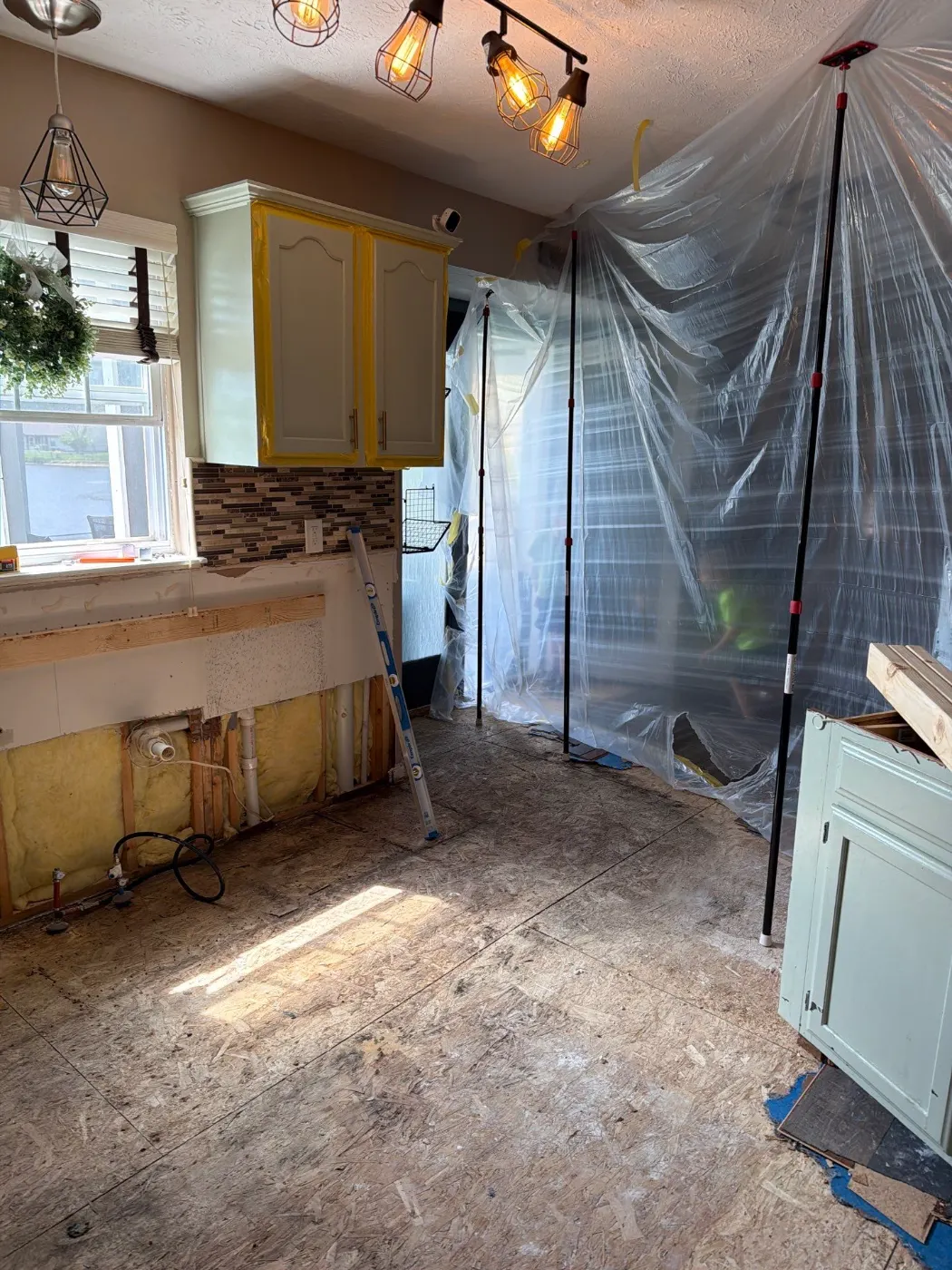
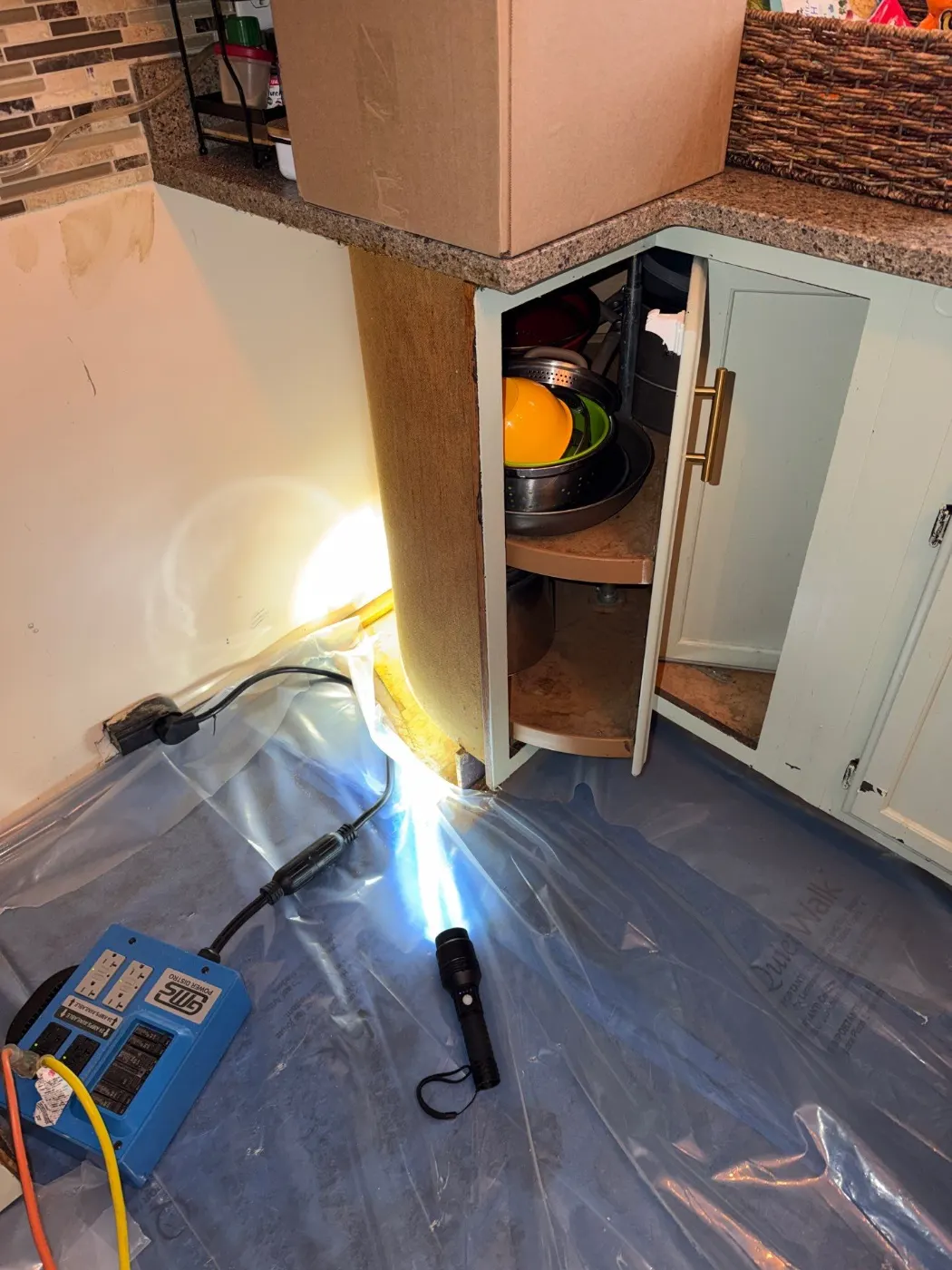
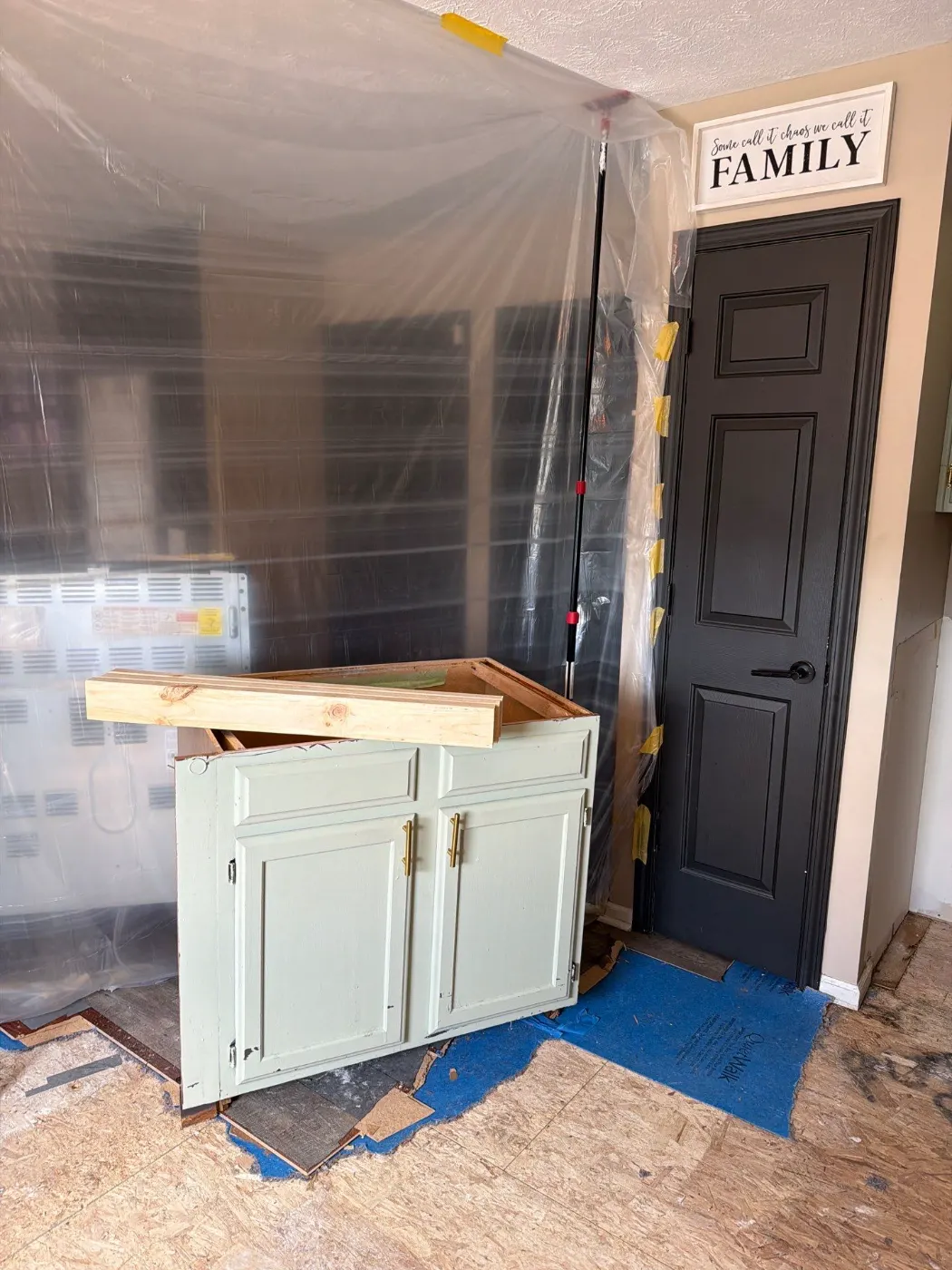
Kitchen water damage in Hunting Creek runs on appliance schedules: dishwasher supply lines, refrigerator ice makers, and sink drains all fail eventually. Water under cabinets and beneath flooring hides until it warps. Fast extraction and cavity drying saves cabinetry that replacement would cost thousands to match.
Reconstruction closes the loop. Once Hunting Creek structures are verified dry, the same coordinated approach handles drywall, paint, trim, and flooring, so homeowners aren't hiring a second company to finish what the first one opened.
Every job here closes the same way: verified dry, documented completely, cleaned up, and walked through together. Hunting Creek homeowners keep the moisture logs, the photos, and a direct number that still answers after the equipment leaves.
Payment Options That Work for You
We partner with established lenders so Hunting Creek Water Restoration clients can spread the cost of a major restoration project into manageable payments. Ask your project lead about current options.
Pay for your project at a later time, but lock in today's pricing. Ideal for homeowners waiting on insurance settlements.
- No payments for 12 months
- No interest if paid in full
- Lock in current pricing today
Divide your project cost equally across 12 months with zero interest. Most homeowners choose this option for predictable budgeting.
- Equal monthly payments
- 0% interest for 12 months
- Simple, predictable budgeting
Spread your investment over up to 20 years with fixed equal payments. The right choice for larger projects or homeowners who prefer lower monthly amounts.
- Up to 20-year terms available
- Fixed equal payments
- Ideal for larger restoration projects
Subject to credit approval. Ask your project lead for current terms and promotions.
Water Damage Restoration Done Right in Hunting Creek
Every service below starts with finding where the water came from and measuring how far it spread.
Water Damage Restoration in Hunting Creek
Serving Hunting Creek: full scope residential water damage restoration including emergency extraction, structural drying, controlled demolition where needed, and reconstruction. Covers burst pipes, appliance failures, supply line leaks, and storm driven water intrusion.
Learn moreBasement Flooding in Hunting Creek
For Hunting Creek addresses, basement water removal and structural drying for finished and unfinished basements, including sump pump failures, foundation seepage, and post storm flooding. Includes affected drywall, flooring, and framing.
Learn moreSewage Cleanup in Hunting Creek
Serving Hunting Creek: category 3 black water cleanup from sewer backups and toilet overflows with solids, performed under containment with full PPE, antimicrobial treatment, and disposal of contaminated porous materials per IICRC S500.
Learn moreStorm Damage in Hunting Creek
In Hunting Creek, water damage restoration following severe storms, including wind driven rain intrusion, window and foundation breaches, and basement flooding from heavy rainfall. Documentation prepared for your insurance claim.
Learn moreCommercial Water Restoration in Hunting Creek
For Hunting Creek addresses, water damage restoration for commercial properties including offices, retail, and multi tenant buildings. Scaled equipment and after hours scheduling to keep operations running where possible.
Learn moreCommercial Flood Damage Cleanup in Hunting Creek
For Hunting Creek addresses, large volume water extraction and structural drying for commercial flood events, with documentation suitable for commercial property insurance claims and continuity planning.
Learn moreCommercial Sewage Cleanup in Hunting Creek
Serving Hunting Creek: category 3 sewage cleanup for commercial properties under full containment, with disposal protocols, antimicrobial treatment, and post remediation verification consistent with IICRC standards.
Learn moreCommercial Mold Remediation in Hunting Creek
For Hunting Creek addresses, mold remediation for commercial buildings performed per IICRC S520, including containment, HEPA-filtered negative air, controlled removal of affected materials, and verification when warranted.
Learn moreCommercial Storm Damage in Hunting Creek
In Hunting Creek, storm damage water restoration for commercial properties, covering wind driven rain intrusion, roof leak water mitigation, and post storm structural drying to return spaces to operation.
Learn more
Local Expertise, Real Results
Built on doing the technical work correctly the first time, the standard Hunting Creek homeowners can actually verify.
Water restoration in Hunting Creek runs through Hunting Creek Water Restoration. Indiana licensed (#RC21100059). IICRC trained. Locally owned and operated. Active since 2018. The work covers what most Hunting Creek water emergencies actually need: extraction, structural drying, mold control, sewage cleanup, and the reconstruction that closes the project.
Hunting Creek Water Restoration serves Hunting Creek homeowners with full scope water damage restoration, covering Greenwood, the broader Center Grove corridor, and surrounding Johnson County communities like Bargersville, New Whiteland, and Whiteland. Our crews are experienced technicians, a licensed crew, working under a licensed and insured restoration company with IICRC certified technicians leading every job. Whether you have a burst supply line at 2 AM or you found warped baseboards a week after a storm, the same trained team responds. Hunting Creek sits in a part of Johnson County where finished basements, copper supply lines, and unpredictable spring weather create a steady mix of emergency calls, and we built the business around answering them.
Every water damage restoration job in Hunting Creek follows the IICRC S500 standard, the published protocol for water damage that governs how losses are categorized, dried, and verified. Mold remediation work, when conditions cross that threshold, follows IICRC S520. In practice, that means an initial moisture assessment with thermal imaging and calibrated meters, controlled extraction sized to the affected area, structural drying with monitored air flow and commercial dehumidification, antimicrobial application where contamination warrants it, and post drying moisture verification before any reconstruction begins. The standards exist because shortcuts here are the reason homes develop hidden mold problems six months later.
Our Promise
Hunting Creek Water Restoration makes three commitments to every Hunting Creek homeowner who calls. First, fast emergency response, dispatched day or night, because every hour without extraction expands the damage in walls, subfloors, and basement framing. Second, IICRC certified technicians trained to the S500 standard, with proper equipment on the truck the day we arrive. Third, a free on site inspection before any work begins, and full coordination with your insurance carrier if you have an active claim. No pressure, no guessing what comes next.
Why Our Crew Fits Hunting Creek Homes
IICRC certified crews, thorough moisture mapping, and straightforward pricing for Hunting Creek homeowners who want the job done right the first time.
Around the Clock Emergency Dispatch
Water damage does not wait for business hours, and neither do we. Call our 24/7 emergency line and crews are dispatched throughout Hunting Creek with extraction equipment, dehumidifiers, and air movers already loaded. Fast response is the single biggest factor in how much of your home can be saved versus demolished.
IICRC S500 Certified Crews
Our technicians are IICRC certified and trained to the S500 standard, the published protocol for water damage restoration. That means proper Category classification, documented moisture readings, and drying verified against unaffected materials before reconstruction starts. For Hunting Creek homeowners, it is the difference between a job done once and a job redone in six months.
Mitigation Through Rebuild
We are not a dry out company that hands you off to a separate contractor. The same crew that extracts water, dries the structure, and removes damaged materials in your Hunting Creek home also handles drywall, flooring, paint, and trim. One company, one project, one point of contact through final walk through.
Insurance Coordination Built In
We document moisture readings, photograph affected areas, and write the scope to match your coverage, then work directly with your insurance carrier and adjuster. You are not stuck translating restoration jargon to your claims rep. We coordinate the paperwork while you focus on getting your home back.
Real Jobs. Real Results.
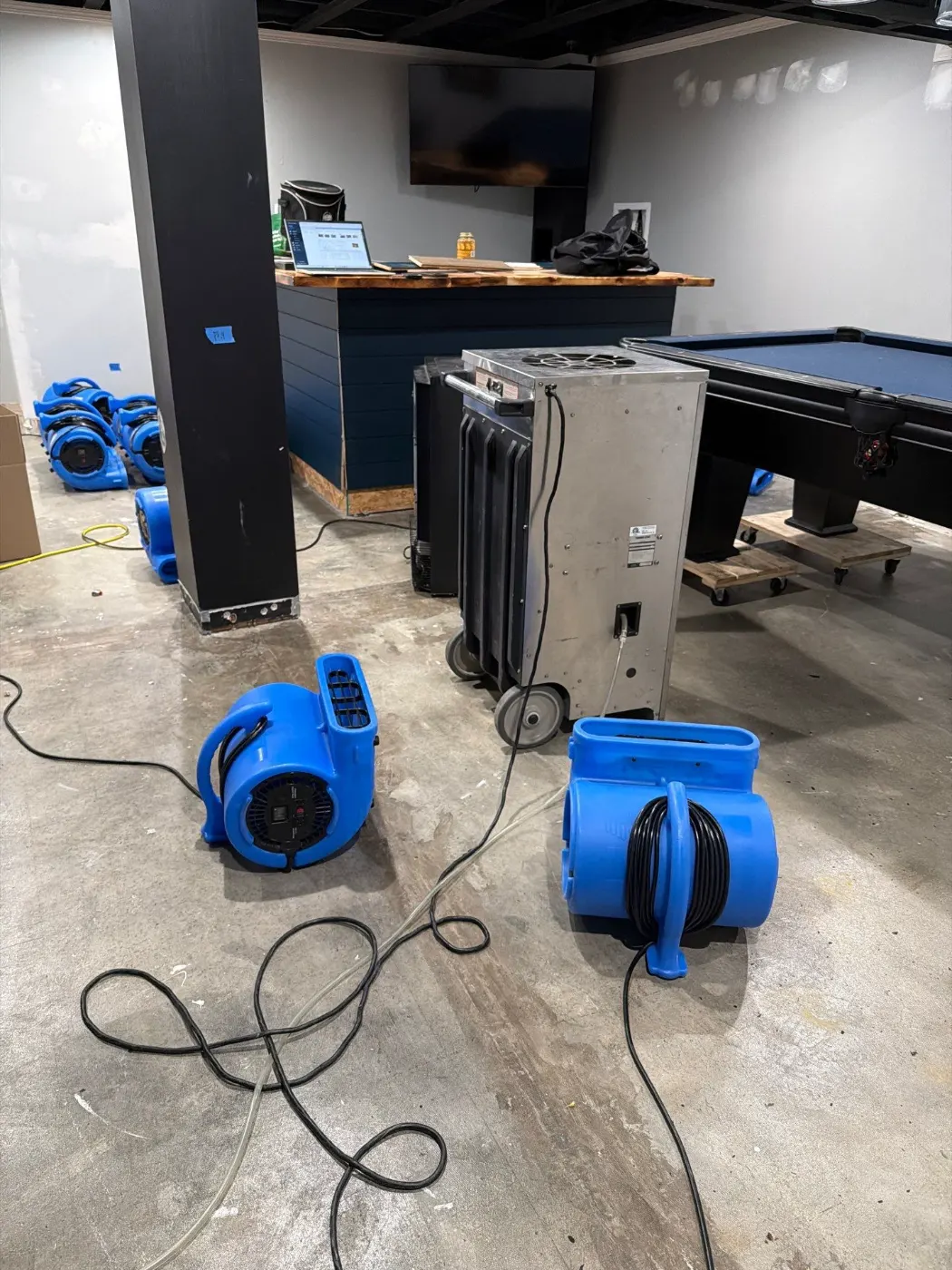
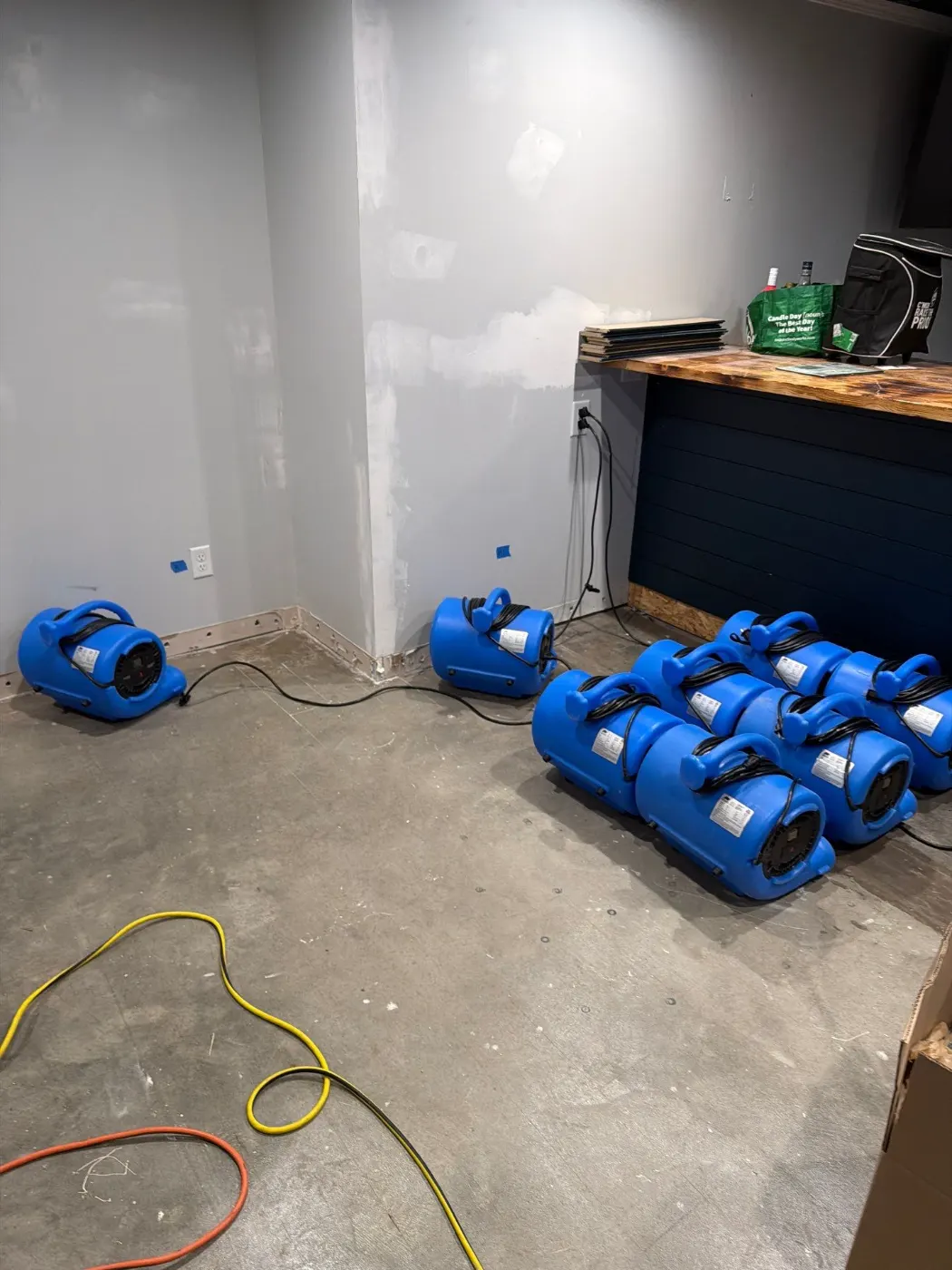
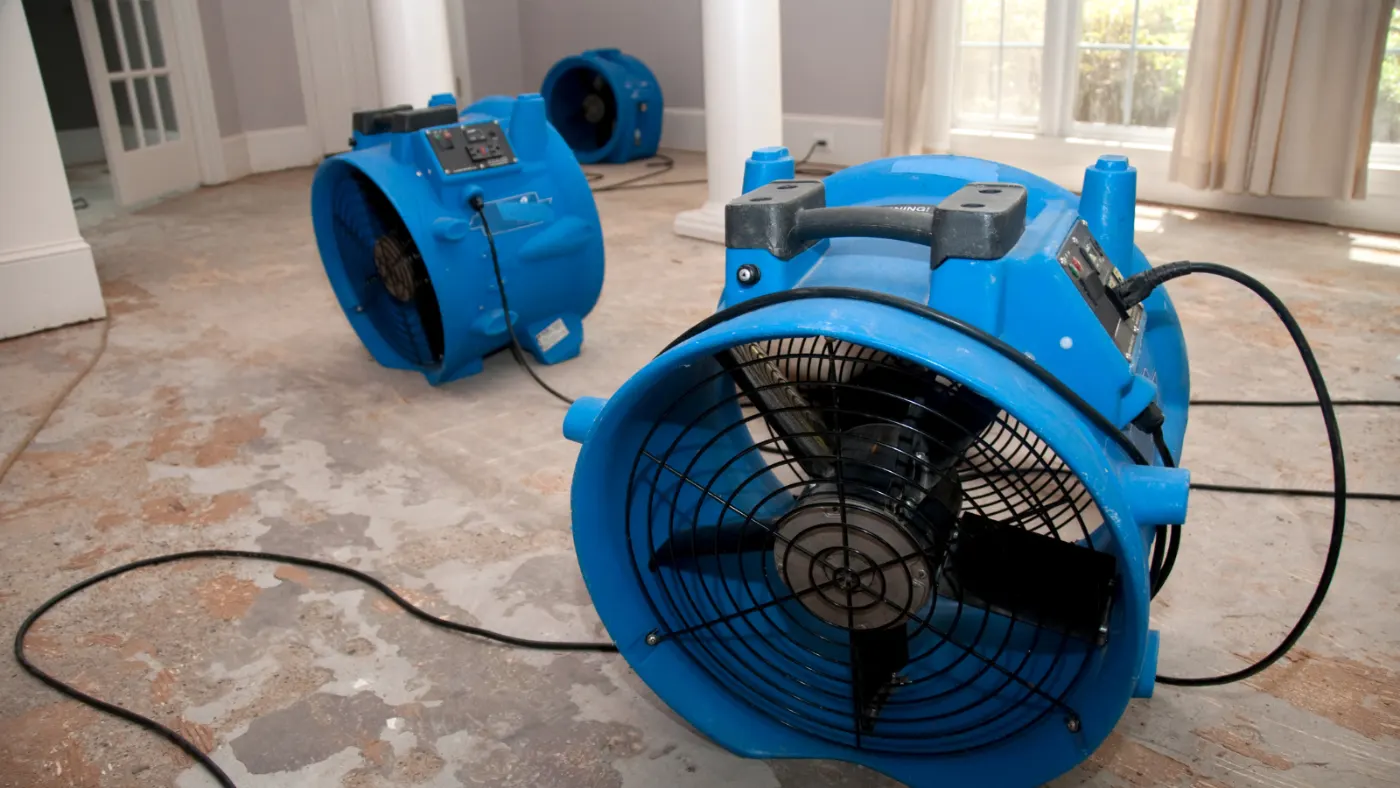
Photos from actual water damage restoration projects across Hunting Creek and Johnson County, including basement floods, burst pipe losses, sewage cleanup, and full reconstruction work.
What Happens After You Call Us in Hunting Creek
The first phase on any Hunting Creek water damage call is moisture assessment and Category determination. A certified tech walks the affected areas with thermal imaging and meters, identifies the source (broken supply line, dishwasher or washer failure, sewage backup, storm intrusion through a window or foundation), and classifies the water as Category 1, 2, or 3 per IICRC S500. We map the full scope of moisture, including hidden cavities behind walls and under flooring, before any drying equipment is staged. This phase typically takes 1 to 2 hours and sets the entire scope of work.
Once the scope is mapped, we move into insurance coordination and documentation. Every affected area is photographed and video documented before mitigation begins, and a written moisture map with logged meter readings becomes part of the claim file. We contact your insurance adjuster directly, walk them through the scope, and justify mitigation per industry standard. Most Hunting Creek homeowners never see the back and forth paperwork because we handle the documentation side with the carrier while you focus on your family and your home.
Then drying execution and reconstruction. Air movers and dehumidifiers are placed based on structural drying calculations for the affected square footage, with daily monitoring and logged moisture readings until materials match the dry standard of unaffected areas. Controlled demolition happens only where materials cannot be dried in place. Reconstruction follows immediately, drywall hung and finished, insulation replaced, flooring installed, paint and trim completed, so your Hunting Creek home gets put back together without month long gaps between phases.
Rapid Emergency Dispatch
Call comes in, crew rolls with extraction equipment, dehumidifiers, air movers, thermal imaging, and meters already on the truck. A certified technician leads the crew and runs the initial assessment on arrival in Hunting Creek. No second trip for equipment, no waiting for a separate inspector.
Category Determination
Per IICRC S500, water gets classified as Category 1 (clean supply line), Category 2 (gray water from appliances or toilet overflow), or Category 3 (sewage, floodwater, long stagnant water). Meter readings are logged, a written assessment is produced, and the scope is built from that classification. This drives every decision that follows.
Insurance Carrier Coordination
We work with your insurance carrier, not around them. Scope is documented, photos and moisture maps are submitted, and we communicate with your adjuster on mitigation justification. Pricing follows industry standard guidelines so you are not hit with surprise line items at the end.
Drying Verified, Then Rebuild
Dehumidifiers and air movers run with daily monitoring until moisture content in affected materials matches unaffected areas. Only then does reconstruction begin. Drywall, flooring, paint, and trim are completed by the same company, so the job closes out cleanly.
Water Damage Sources in Hunting Creek
Downspouts Discharging at the Foundation
Extensions are the cheapest prevention there is. Get the discharge several feet out and downhill, keep the grade sloping away from the house, and most of the seepage calls stop coming.
Slab Leak Under the Floor
A supply line under a slab can leak a long time before anything looks wrong. The early signs are a warm patch on the floor, a water bill that climbed for no reason, or one section of flooring that lifted while everything around it stayed flat.
Sink Drain and P-Trap Leaks
Under a kitchen or bath sink the joints are hand tight, the trap collects everything, and a slip nut backed off a quarter turn drips on every use. The cabinet floor swells, the base panel delaminates, and the wall behind it stays damp.
Washing Machine Hose Burst
Braided stainless hoses fail at the crimp and old black rubber ones fail down the middle. Either way it starts as a weep at the fitting and then opens. Replacing both hoses is a cheap Saturday; drying a laundry room and the room under it is not.
Tub and Shower Pan Leaks
Tub surrounds leak at the spout penetration, at the valve escutcheon, and where the deck meets the wall. Any of the three puts water behind the surround, soaking framing and subfloor without ever running across the bathroom floor.
Refrigerator Ice Maker Line
That quarter inch line feeding the ice maker is the smallest supply in the house and the one nobody looks at. It gets pinched when the refrigerator slides back, then weeps behind the unit where nothing is visible until the flooring cups.
How to Protect Your Hunting Creek Home in the First Hour of a Water Leak
If you just found water in your Hunting Creek home, shut it off at the source first and keep everyone away from anything electrical. Then go through the rest of these steps in order while our crew heads your way.
1. Stop the source
For a toilet or a washing machine, close the small shutoff valve behind it. If the leak is bigger, or you can't tell where it starts, close the main valve for the whole house and leave it off until our crew checks the source.
2. Watch the ceiling
If water is coming through a ceiling, keep people out of the room below. A ceiling that sags or bulges can hold a lot of water, and the light fixtures in it may be wet, so turn those circuits off at the panel if you can do it safely.
3. Protect yourself first
If you have to step into wet areas, wear rubber boots and gloves. Take the basement stairs slowly if they're wet, and leave the cleanup of any dirty water to the crew.
4. Move what you can't replace
Carry keepsakes and important papers to a dry room upstairs. Then pick up anything sitting on a wet floor, starting with cardboard boxes and anything made of paper, since those soak up water quickly.
5. Keep stains off the carpet
Metal furniture feet can rust, and wood finishes can bleed into wet carpet. A square of foil or a plastic container lid under each leg keeps both off the carpet, and it takes only a few minutes to do.
6. Hold off on tearing anything out
Leave soaked drywall and flooring in place until our crew has measured it. Some materials dry where they are, and the readings tell us which ones can stay, so early demolition can mean replacing things that could have been saved.
7. Let the air reach wet spots
In rooms with clean water, open closet and cabinet doors so air reaches the wet spots. On a hot, sticky day, keep the windows closed and leave the air conditioning on, since it pulls moisture out of the air.
8. Call us and describe what you see
When you call, tell us where the water seems to be coming from and which rooms it reached. Those two details help the crew bring the right equipment on the first trip to your Hunting Creek home.
If you only get through the first two steps before help arrives, that's fine, since the water source and your safety come first. Call us when you're ready and we'll take it from there.
Three Simple Steps
Whether the water came from a pipe or a storm, the job moves through these same steps.
Emergency Dispatch
Every gallon removed early is material saved later. The phone gets answered at 2 a.m. the same way it does at noon, with a crew out the door within 2 hours.
Measured Room by Room
Guesswork here costs real money in week six. Claim documentation is part of the job, not an upsell.
Dried to Spec
Demolition is minimal and justified by a reading every time. Nothing closes until Hunting Creek moisture content is verified, usually 3 to 5 days.
How We Document Water Damage in Hunting Creek Homes
The photo report lets you see the damage for yourself, room by room, with the crew's photos and the readings behind every recommendation we make in your Hunting Creek home. It starts on the first visit and grows as the drying goes.
The starting point
Every report opens with the starting point of the leak, photographed before anything is moved. Water that came from outside, like a window well or a storm, gets noted the same way, with photos of where it got in.
What a thermal camera shows
A thermal camera picks up the cooler surfaces that wet materials leave behind. When the crew uses one, the images go in the report next to the meter readings that confirm what the camera found.
Pictures from start to finish
Photos go into the report at each stage of the job, starting with the damage the crew found when they first walked in. By the end, you have a visual history of the room from wet to dry.
Saving what can be saved
Drying in place is usually less disruptive than tearing out and replacing, and the readings show when it's possible. The report notes what the crew is drying in place and what it plans to remove, with photos of both.
Updates as the work goes
Drying takes several days in most homes, and the report grows the whole time. New readings and photos get added on each visit, so you always know where things stand in each room.
We walk you through it
Once the first readings are in, we sit down with you and go through the report in plain language. You can see what's going on inside your walls from your living room and ask about anything that doesn't make sense.
A record that's yours
Keep the report with your home records. We document damage with a photo report and walk you through what we found, so you can decide with your insurance company. Your policy will say what's covered, so read it before you call them.
When the crew arrives, they'll start the photos and readings right away, and we'll set a time to walk you through the first results.
Questions Worth Asking Before Work Starts in Hunting Creek
Clear answers to these questions make it easier to compare restoration companies in Hunting Creek.
Who will be working in my home?
Ask whether the crew works for the company you called or for a subcontractor, and who's in charge on site each day.
How will you show me it's dry?
Ask for moisture readings on the first visit and the last one, so you can see the numbers reach dry standard.
Can I see an itemized estimate?
Ask for every line item in writing. Many insurers price water losses in Xactimate, so an estimate in that format is easier for an adjuster to review.
Does my policy require a certain company?
Ask your adjuster before you sign anything, and read the work authorization so you know what you're agreeing to.
What happens if you find mold?
Ask how mold behind walls or under floors gets handled, and whether that work is priced apart from the drying.
Who handles repairs after drying?
Ask who replaces drywall, flooring, paint and trim once the structure is dry, and whether one company can do both stages.
Indiana Weather Drives Restoration Calls Year Round
Indiana weather drives a steady volume of water damage calls in Hunting Creek: spring rain saturating basements through foundation walls, summer thunderstorms pushing water through window wells, and winter freeze thaw cycles bursting copper supply lines in unheated utility spaces. Each pattern brings its own failure mode, and each is documented across Johnson County.
Spring Saturation Flooding
Johnson County has a documented pattern of severe spring flood events, and saturated ground pushes water through foundation walls and up through basement slab joints in Hunting Creek. Sump pumps fail under continuous load, especially during multi day rain events. When called in, we extract standing water, pull saturated insulation and drywall, and dry the framing before mold sets in.
Winter Pipe Bursts
Indiana freeze thaw cycles hit Hunting Creek hard, and copper supply lines in unheated basement utility spaces or exterior walls split when temperatures drop suddenly. A burst at 2 AM can dump hundreds of gallons before anyone notices. We respond around the clock, stop the spread, extract, and start structural drying the same visit.
Severe Thunderstorm Intrusion
Severe storms across the Greenwood corridor regularly drive water through window wells, foundation cracks, and damaged exterior penetrations. The April 2025 storm pattern and prior June 2023 severe weather event both produced calls for water intrusion in this part of Johnson County. We extract, document for the claim, and dry the affected structure to S500 standard.
Summer Humidity and Mold
Indiana summers run humid, and a finished basement that took on water in May can grow mold by July if it was not dried properly the first time. Mold begins colonizing within 24 to 48 hours of wetting under the right conditions. We dry to verified moisture targets and apply antimicrobials where warranted to interrupt that cycle.
Water Restoration by Hunting Creek Neighborhood
Open a neighborhood name for a short read on its homes, including the basements and the age of the plumbing.
Where we respond near Hunting Creek
Our dispatch line runs 24/7 for Hunting Creek and the communities closest to it.
Why Hunting Creek Homes Flood
What Hunting Creek homes and weather mean for a water loss.
About Hunting Creek Homes
Hunting Creek is a residential subdivision in Greenwood, Indiana, situated in the broader Center Grove area of Johnson County. Greenwood experienced rapid suburban growth beginning in the 1970s and continued through the 1990s and 2000s, placing most homes in the area in the late-1980s through early-2000s build range, an era dominated by copper supply plumbing, with some older homes carrying remnant galvanized lines and newer builds transitioning to PEX. The Greenwood/Center Grove housing stock ranges from midcentury ranch style homes to two story traditional suburban homes built in planned subdivision settings, with finished basements common throughout the area. MLS listings in and around Hunting Creek frequently reference full or partial finished basements, two story layouts, and attached garages, consistent with the standard suburban Indiana build pattern for this era.
Where We Work in Hunting Creek
We cover homeowners across Hunting Creek near Greenwood Park Mall, Craig Park, Greenwood Fieldhouse, Center Grove Community School Corporation campuses, U.S. Highway 31 corridor, State Road 135, Stones Crossing Road, Oaken Barrel Brewing Company.
Surrounding Areas We Serve
Our crew also covers Center Grove, Bargersville, New Whiteland, Whiteland, Barrington East, Pleasant Creek (Greenwood).
Recent Weather Patterns
Johnson County, which encompasses Greenwood and the Hunting Creek subdivision, has a well documented pattern of severe flood events, most notably the catastrophic June 2008 flood that filled basements, forced boat evacuations, and prompted Greenwood to buy out flood prone homes afterward. More recently, April 2025 storms brought tornado warnings with rotation detected over northern Greenwood and flash flooding reported across northern Johnson County roads, and a June 2023 severe weather event prompted NWS Indianapolis damage surveys specifically in the Greenwood-Whiteland corridor with hail up to 1.25 inches recorded east of Greenwood.
What Our Crew Sees in Hunting Creek
Greenwood's suburban Indiana construction era means the majority of homes in and around Hunting Creek carry full basements, a regional standard, making basement water intrusion, sump pump failure, and post storm seepage persistent restoration risks. The area sits within Johnson County's documented flood corridor, with creeks and low lying drainage areas historically overwhelmed during heavy rainfall events, and the city has an active stormwater master plan reflecting ongoing drainage deficiencies. Indiana's freeze thaw cycle adds seasonal burst pipe exposure to older copper supply lines in homes built before the mid-2000s PEX transition, particularly in unoccupied or under insulated basement utility spaces.
The Hunting Creek Area
Greenwood, IN had a population of approximately 49,791 as of 2010 and has continued to grow as a suburb roughly 15 minutes south of downtown Indianapolis. The broader Hunters Creek Village area of Hamilton County shows a comparable suburban Indianapolis median household income around $108,000, and Greenwood's Center Grove corridor is similarly characterized by professional, family oriented households with strong owner occupancy rates.
The Work Behind a Dry Out in Hunting Creek
What the equipment does, what containment is for, and who rebuilds.
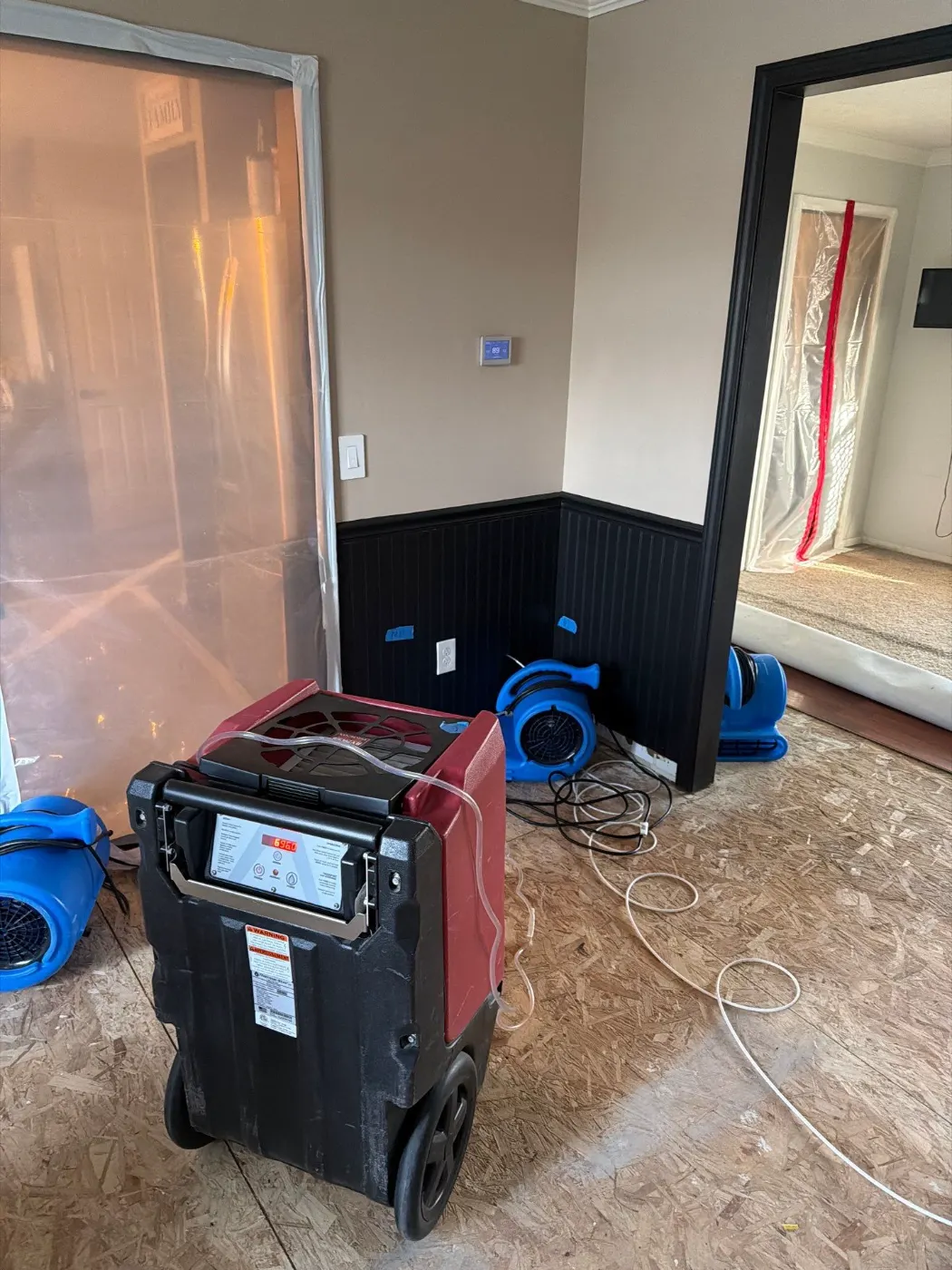
When the crew arrives on a Hunting Creek water damage call, the truck is already loaded with what the job needs: commercial water extraction equipment for standing water, commercial dehumidifiers sized to the affected square footage, professional air movers for evaporation, calibrated moisture meters, and thermal imaging for hidden moisture mapping. Extraction begins promptly on site, and structural drying equipment is staged and running the same day in most Category 1 and Category 2 losses. Daily monitoring with logged readings tracks progress against the S500 dry standard. From the homeowner side, work zones are contained with plastic sheeting where appropriate, unaffected areas are protected, and you get clear communication on what to expect each day, how many days drying will likely take, and what the readings show.
Specialized containment comes into play on Category 3 water losses (sewage backup, floodwater, long stagnant water with biological contamination) and on full mold remediation projects per IICRC S520. Containment means 6-mil plastic barriers floor to ceiling sealing off the affected area, sealed entry points, and negative air machines pulling contained air through HEPA filtration before exhausting outside the work zone. Technicians work in full PPE: Tyvek suits, N95 or P100 respirators per S520, nitrile gloves, eye protection. Contaminated porous materials are cut, bagged, and disposed of, antimicrobial is applied to remaining structural surfaces, and post remediation verification with air sampling is performed when warranted. This is the phase where IICRC certification matters most. Corner cutting on Category 3 or mold work is what causes the long term respiratory and structural problems homeowners deal with a year later.
Reconstruction is where the job actually closes. The same company that performed extraction and drying rebuilds: drywall hung, taped, mudded, sanded, primed, and painted; flooring replaced (carpet and pad, vinyl plank, hardwood refinished, tile reset); baseboards and trim reinstalled or replaced; cabinetry repaired or replaced; doors rehung; electrical and plumbing finish work coordinated with licensed trades where required. From the homeowner side, you have one project manager, one schedule, and one final walk through. The alternative most companies offer is a handoff after dry out to a separate general contractor, which means two crews, two schedules, two billing cycles, and weeks where the home sits in mid demolition between phases. Hunting Creek homeowners get the full restoration under one roof so the home gets put back together without that gap.
What to Expect While Drying Equipment Runs in Your Hunting Creek Home
In many cases you can stay home while the drying equipment runs, and the crew will tell you on the first visit if any room should stay closed off. The days ahead are mostly about leaving the equipment alone and letting it work.
What each machine does
Air movers push air across wet floors and walls so the water evaporates, and dehumidifiers pull that moisture back out of the air. The two kinds of machines work as a pair, so both need to keep running.
Set units back the way they were
The crew places each unit based on where the readings are wettest. If you bump one or need to get past it, set it back the way it was, aimed at the same spot.
Keep the room set up the same way
The crew will tell you which doors to keep closed and where to set the thermostat. Drying works by controlling the air in the room, so keeping it the way it was set up keeps the drying on schedule.
Your electric bill
Running several machines for days will raise your electric bill for that month, and that's a normal part of drying a home. The crew removes each unit as soon as the readings say its area is dry.
Pets and drying rooms
Pets tend to be curious about the noise and the warm air, so keep them out of the drying rooms when you can. A gate across the doorway works if a door has to stay open.
What the daily check covers
On each visit the crew takes new moisture readings in the same spots as before and moves or removes equipment based on what the numbers show. Those readings go into your photo report, so you can see the change from one day to the next.
If you're worried about mold
CDC doesn't recommend mold testing, and EPA says homeowners can usually clean moldy areas under about 10 square feet themselves. If you see or smell mold during the dry out, point it out to the crew on their next visit.
What happens after drying
Once everything reads dry, the crew pulls the equipment and you get the final readings in your photo report. Any drywall or flooring that came out can be put back after that, and the crew will talk through the rebuild with you.
Call us with any question about the equipment, and we'll help you sort it out over the phone or on the next visit.
Sources: CDC, About Mold · EPA, A Brief Guide to Mold, Moisture and Your Home
Hunting Creek water damage pricing
Mitigation ranges for Hunting Creek. Insurance covers most claims.
Answers About Drying, Claims, and Rebuild in Hunting Creek
If you're dealing with water in your Hunting Creek home right now, start with these answers.
Expert Hunting Creek Restoration Crews Available Now
If water is spreading through your Hunting Creek home right now, or if you suspect hidden moisture after a recent storm or leak, call Hunting Creek Water Restoration for fast emergency dispatch. Free on site inspection, no obligation, and we coordinate directly with your insurance carrier from the first phone call.